
Florida Appellate Court Upholds Drug-Free Workplace Policy Against Employee with Medical Marijuana Card
Florida Appellate Court Upholds Drug-Free Workplace Policy Against Employee with Medical Marijuana Card
The appellate court determined that, under the specific collective bargaining agreement (CBA) at issue and Florida’s constitutional and statutory framework, the county was not required to treat a medical marijuana card as a defense to a positive drug test. Notably, the court also determined that the Florida Constitution and Section 381.986, Florida Statutes, do not create an accommodation mandate related to medical marijuana. The decision provides important guidance for employers with safety-sensitive workforces.
Introduction
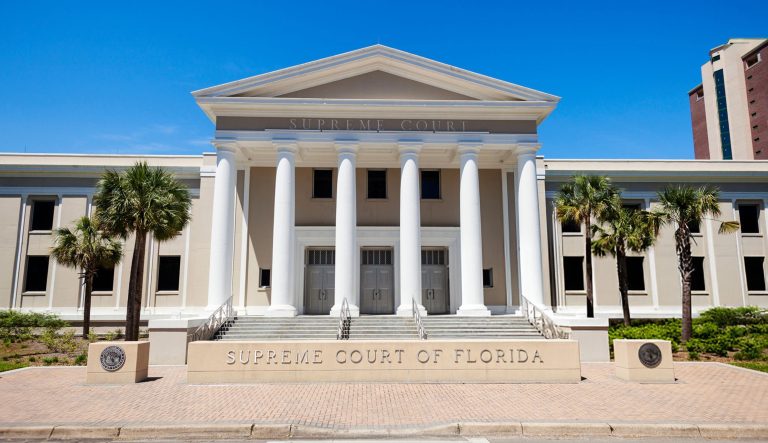
On July 29, 2026, the Florida Second District Court of Appeal in Hillsborough County v. Giambrone, No. 2D2025-0115 (Fla. 2d DCA, July 29, 2026), reversed a trial court order that had required the County to accommodate employees presenting a medical marijuana card after testing positive. The appellate court determined that, under the specific collective bargaining agreement (CBA) at issue and Florida’s constitutional and statutory framework, the County was not required to treat a medical marijuana card as a defense to a positive drug test. Notably, the court also determined the Florida Constitution and Section 381.986, Florida Statutes, do not create an accommodation mandate related to medical marijuana. The decision provides important guidance regarding medical marijuana for employers with safety-sensitive workforces.
Key Facts
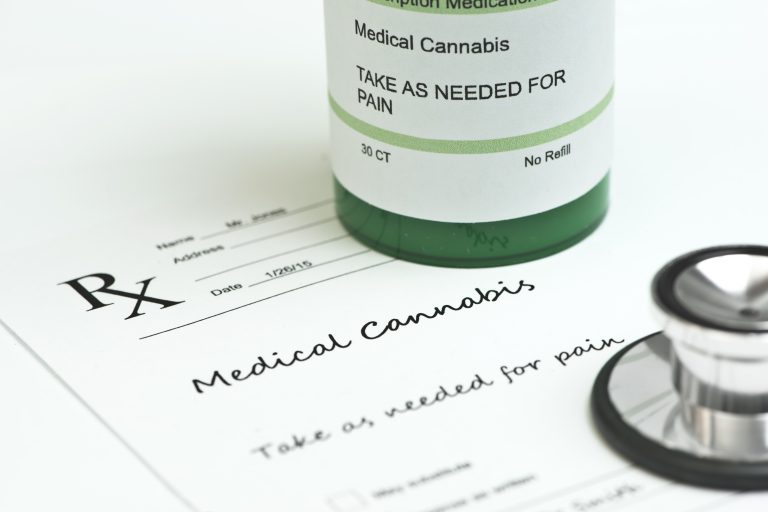
Angelo Giambrone, a firefighter paramedic for Hillsborough County Fire Rescue, was selected for a random urine drug test on February 26, 2019. The test was not triggered by any workplace incident or suspicion of impairment, and Mr. Giambrone held a valid Florida medical marijuana card and presented it to the Medical Review Officer (MRO). The CBA between the County and Mr. Giambrone’s union, IAFF Local 2294, prohibited drug use “at any time while employed by Hillsborough County Fire Rescue, other than alcohol or prescribed medications.” It defined “prescription” medications by reference to section 893.02, Florida Statutes, which requires dispensing through the pharmacist framework of section 893.04, Florida Statutes.
The drug test results returned positive for marijuana and the County placed Mr. Giambrone on unpaid administrative leave. No evidence existed of any on-premises use, performance issues, or prior complaints. Mr. Giambrone subsequently filed suit asserting: (1) failure-to-accommodate under the Florida Civil Rights Act (FCRA), (2) wrongful termination based on the County’s refusal to accept the medical marijuana card as justification for the positive result under the County’s drug-free workplace policy and CBA, (3) failure to update the drug-free workplace policy, and (4) breach of the CBA. The trial court granted summary judgment for Mr. Giambrone and ordered broad prospective relief.
The Court’s Decision
The appellate court reversed the trial court on all counts, deciding:
- No affirmative accommodation mandate exists under Florida law. Article X, Section 29 of the Florida Constitution and section 381.986(15), Florida Statutes, do not create an employer duty to accommodate off-duty medical marijuana use. Specifically, the court wrote “Florida’s medical marijuana provisions do not constitutionalize continued public employment, and they do not prohibit an employer—or a collectively bargained-for agreement—from imposing and enforcing stringent fitness-for-duty standards in a safety-sensitive setting.”
- A medical marijuana authorization card is not a “prescription” under the CBA. Medical marijuana is dispensed through physician certification and licensed treatment centers, not the pharmacist-centered system of section 893.04, Florida Statutes, and is not authorized for “general distribution and use without a prescription.” Thus, medical marijuana did not fall under the protections of the CBA.
- The MRO was not required to verify the test as negative because the card does not constitute evidence of “prescription or non-prescription drug use” under applicable CBA definitions.
- The CBA’s drug prohibition extends beyond the workplace. The trial court improperly narrowed the prohibition beyond the terms of the CBA. The CBA simply prohibits drug use “at any time while employed.”
- The trial court’s prospective relief was improper. The broad countywide directive by the trial court constituted unrequested injunctive relief and violated separation of powers.
- Federal rescheduling to Schedule III (effective April 28, 2026) does not change the outcome. Medical marijuana remains limited to authorized users and medical purposes, and Mr. Giambrone’s case was governed by 2019 law. Regardless, the CBA’s language still controlled and the federal rescheduling did not require a different outcome.
Express Limitations on the Holding
The court stated explicitly: “This appeal turns on the interaction between Florida’s constitutional and statutory framework for medical marijuana and the County’s drug-free workplace policy as applied to employees covered by this particular CBA. How other employers, or employees subject to different CBAs or different policies, may address medical marijuana is not before us.” The court does not hold section 381.986(15), Florida Statutes, eliminates rights under the FCRA, does not decide whether a different FCRA claim might be viable, and does not address whether the FCRA independently requires accommodation outside this CBA’s framework.
Practical Takeaways for HR Professionals
- Enforcement is supported—but the holding is narrow. Employers with drug-free workplace policies that do not carve out a medical marijuana exception can enforce positive test results. However, this is tied to this CBA, its definitions, and safety-sensitive roles.
- Review your CBA and policy language. The outcome turned on how “prescription” was defined and whether the prohibition extended beyond the workplace. Different definitions could yield different results.
- Safety-sensitive roles are on strongest ground. First responders with “at any time” drug prohibitions are best positioned under this precedent.
- FCRA claims are not categorically foreclosed. The court left open whether different accommodations or policy structures could support an FCRA claim. Do not use this decision to refuse all accommodation requests from medical marijuana authorization card holders.
- Federal rescheduling does not create an accommodation right. Courts will not impose a judicial obligation to rewrite drug-free workplace policies for medical marijuana.
- Consult counsel before acting. Given the express limitations, employers should engage employment counsel before relying on this opinion, particularly in non-safety-sensitive roles or under different CBA language.
Reprinted with permission from the August 6, 2026, edition of Daily Business Review © 2026 ALM Media Properties, LLC. All rights reserved. Further duplication without permission is prohibited, contact 877-257-3382 or reprints@alm.com.